1. Dhikala Zone
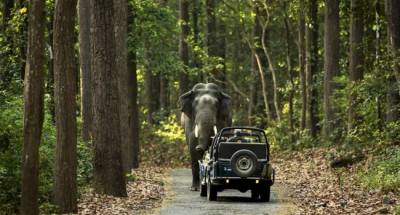
The Dhikala Zone is the largest and most popular among all Jim Corbett National Park zones, known for its wide valleys, rivers, and grasslands. Considered the best zone in Jim Corbett for tiger sightings, it also offers views of elephants, gharials, and rich birdlife. A highlight here is the chance to stay overnight inside forest lodges, something not allowed in other zones. Jeep safaris run from 6:00 AM to 9:30 AM and 2:00 PM to 6:00 PM, providing thrilling opportunities for wildlife encounters. The entry point is the Dhangarhi Gate, about 30 km from Ramnagar. Because Dhikala is the Corbett National Park best zone for photography and adventure, permits are limited and get booked months in advance. For many, Dhikala is undoubtedly the best zone for safari in Jim Corbett, combining wilderness, excitement, and overnight stay in the heart of nature.
Safari Timings: Morning (6:00 AM – 9:30 AM) & Evening (2:00 PM – 6:00 PM). Night stay available in forest lodges.
Distance from Ramnagar: Around 30 km (Dhangarhi Gate entry).
2. Bijrani Zone
Among the most scenic Jim Corbett zones, the Bijrani Zone is famed for its dense Sal forests and open meadows. Tourists often call it the Jim Corbett National Park best zone for capturing tiger photographs due to frequent sightings. Besides tigers, you can spot elephants, deer, and many bird species here. The safari timings are 6:00 AM to 9:30 AM and 2:00 PM to 6:00 PM, ideal for exploring its rich habitats. Bijrani’s entry is through the Amdanda Gate, only 2 km from Ramnagar, making it highly convenient for visitors. Its proximity and beauty make Bijrani one of the best zones in Jim Corbett National Park for both families and wildlife enthusiasts. Since demand is very high, safari permits for Bijrani are often booked early, so it is advisable to reserve well in advance.
Safari Timings: Morning (6:00 AM – 9:30 AM) & Evening (2:00 PM – 6:00 PM).
Distance from Ramnagar: Only 2 km (Amdanda Gate entry).
3. Jhirna Zone
The Jhirna Zone is unique among all Jim Corbett safari zones because it remains open throughout the year, even during monsoons when other zones are closed. Located on the southern side of the Jim Corbett National Park area, it is home to sloth bears, elephants, leopards, and diverse birdlife. Its mix of riverbeds, grasslands, and forested patches ensures memorable sightings. Safari timings are 6:00 AM to 9:30 AM and 2:00 PM to 6:00 PM, and the entry is through the Dhela Gate, about 16 km from Ramnagar. Compared to Dhikala or Bijrani, getting permits here is easier, making it less crowded yet rewarding. For many, Jhirna is the best zone in Jim Corbett during the off-season. Its easy availability and scenic landscape make it a top choice for travelers who want to experience Corbett in every season.
Safari Timings: Morning (6:00 AM – 9:30 AM) & Evening (2:00 PM – 6:00 PM). Open throughout the year.
Distance from Ramnagar: Around 16 km (Dhela Gate entry).
4. Dhela Zone
Opened to tourists in 2014, the Dhela Zone is one of the newest zones in Jim Corbett. Despite being relatively new, it has quickly become known for its peaceful environment and rich biodiversity. Tourists can often spot tigers, elephants, nilgai, wild boars, and deer, along with many bird species. Safaris operate from 6:00 AM to 9:30 AM and 2:00 PM to 6:00 PM, and entry is via the Dhela Gate, located around 15 km from Ramnagar. Since the zone is less crowded compared to others, it offers a serene experience in the Jim Corbett National Park area. Wildlife lovers who seek a calm atmosphere often consider Dhela as an emerging contender for the best zone for safari in Jim Corbett because it provides unspoiled natural beauty with equally rewarding wildlife encounters.
Safari Timings: Morning (6:00 AM – 9:30 AM) & Evening (2:00 PM – 6:00 PM).
Distance from Ramnagar: Around 15 km (Dhela Gate entry).
5. Durga Devi Zone
The Durga Devi Zone is popular among birdwatchers and nature photographers. Located in the northeastern area of Jim Corbett National Park, it is filled with hilly terrain, river streams, and lush greenery. Birds like the crested laughing thrush, maroon oriole, and black eagle thrive here, while leopards, elephants, and wild boars are also frequently seen. Safari timings are 6:00 AM to 9:30 AM and 2:00 PM to 6:00 PM, and the entry is through the Durga Devi Gate, about 28 km from Ramnagar. While tiger sightings are rare compared to Dhikala or Bijrani, the zone’s natural beauty and bird diversity make it a hidden gem among the Jim Corbett National Park zones. Many travelers consider it the best zone in Jim Corbett for birdwatching and peaceful jungle exploration away from the tourist rush.
Safari Timings: Morning (6:00 AM – 9:30 AM) & Evening (2:00 PM – 6:00 PM).
Distance from Ramnagar: Around 28 km (Durga Devi Gate entry).
6. Garjia Zone
The Garjia Zone is a recently developed safari area, designed to handle the growing popularity of Jim Corbett safari zones. Located close to Ramnagar, it offers an excellent mix of wildlife and natural beauty. Visitors can spot elephants, deer, wild boars, and sometimes tigers. The safari timings are 6:00 AM to 9:30 AM and 2:00 PM to 6:00 PM, and the entry point is the Garjia Gate, only 9 km from Ramnagar. Its location near the Kosi River makes it rich in bird species as well. Due to its accessibility and well-maintained safari routes, Garjia is considered family-friendly and is often the first choice for beginners. Many tourists find it one of the best zones in Jim Corbett National Park for its convenience and natural charm. As one of the newer Jim Corbett National Park entry gates, it is less crowded yet highly rewarding.
Safari Timings: Morning (6:00 AM – 9:30 AM) & Evening (2:00 PM – 6:00 PM).
Distance from Ramnagar: Around 9 km (Garjia Gate entry).
7. Sitabani Zone (Buffer Zone)
The Sitabani Zone is a buffer area but remains one of the most visited zones in Jim Corbett due to its peaceful setting and mythological connection with Goddess Sita from the Ramayana. The landscape is diverse, with river streams, dense forests, and open meadows. Wildlife includes leopards, elephants, jackals, barking deer, and many bird species, though tiger sightings are rare. Safari timings are 6:00 AM to 9:30 AM and 2:00 PM to 6:00 PM, and the entry is through the Sitabani Gate, located about 25 km from Ramnagar. Unlike core zones, private vehicles are also allowed here with permission. Sitabani may not be the Corbett National Park best zone for tiger spotting, but it is perfect for travelers seeking a peaceful safari with natural beauty, photography opportunities, and a touch of spirituality in the Jim Corbett National Park area.
Safari Timings: Morning (6:00 AM – 9:30 AM) & Evening (2:00 PM – 6:00 PM).
Distance from Ramnagar: Around 25 km (Sitabani Gate entry).

 Blogs
Blogs